
Introduction
Transferring a patient safely between a bed and a chair is a routine but high-risk task in home and clinical care. A planned, methodical approach reduces the chance of falls, skin tears, strained caregivers, and patient anxiety.
This guide lays out practical steps, the right equipment, and simple techniques—so caregivers can perform transfers with confidence and safety.
1. Assess the patient and make a plan
Before any transfer, evaluate the patient’s mobility, cognition, pain, recent vitals, weight-bearing status, and any lines or drains. Clarify whether the patient can stand, pivot, bear weight on one leg, or needs full assistance.
If the patient is at risk of trying to get up unassisted, a monitoring device can alert you so transfers don’t become urgent. Consider devices like the Smart Caregiver Bed Exit Alarm to help manage timing and reduce unsupervised attempts.
2. Prepare the environment and chair
Clear the pathway between bed and chair of rugs, cables, and clutter. Position the chair at a 30–45° angle to the bed if a pivot transfer will be used. Lock the chair and bed wheels and put the bed at a height that allows the caregiver to use good body mechanics (typically hip level).
When the patient will use a chair with mechanical assistance, a lift-assist recliner can reduce effort and improve safety—consider a Power Lift Recliner Chair for frequent independent stand-and-sit assistance.
3. Use appropriate equipment
Choose the right equipment for the patient’s needs: gait belts for stand-assist transfers, slide boards for limited standing ability, transfer sheets for dependent lateral moves, and mechanical lifts for non-weight-bearing patients. Keep equipment maintained, clean, and ready.
For lateral or semi-dependent transfers, specialized Patient Transfer Sheets reduce friction and protect skin and caregivers’ backs.
4. Mechanical lifts for dependent transfers
When a patient cannot bear weight or when the caregiver cannot safely perform a manual lift, use a mechanical lift. Follow manufacturer instructions and training. Confirm sling size, attachment points, and weight capacity before lifting.
For powered lifts with a high weight capacity and low-base design, consider options such as the Invacare Reliant 450, which can make transfers safer and less physically demanding for caregivers.
5. Standing pivot transfer: step-by-step
Use this when the patient can stand and bear some weight. Steps:
- Explain the move and gain agreement. Put nonslip footwear on the patient and remove obstacles.
- Lock bed and chair. Sit the patient up on the edge of bed with feet flat and hips forward.
- Apply a gait belt snugly around the waist. Caregiver stands close with feet shoulder-width apart and knees bent.
- On a cue, help the patient push from the bed with their hands and assist to stand. Pivot together toward the chair—avoid twisting your back.
- Lower the patient slowly into the chair, guiding hips to the back of the seat and ensuring safe seating position.
If the patient will continue ambulating after transfer, consider follow-on mobility aids such as Forearm Crutches to support independence while maintaining balance and safety.
6. Lateral (sheet) transfer technique
When the patient cannot stand but can be moved laterally, use a slide or transfer sheet to reduce shear. Position the sheet under the patient, roll the patient gently toward you to place the sheet, and roll to the other side to smooth it out. Use long, coordinated movements to slide the patient toward the chair.
A multipurpose transfer sheet with reinforced handles can make the task easier and safer for caregivers; consider products like the Multipurpose 48″ x 40″ Positioning Bed Pad for frequent lateral moves.
7. Transferring to a wheelchair or transport chair
When moving a patient into a wheelchair, align the wheelchair close to the bed, lock brakes, and remove or swing away footrests. If performing a pivot transfer, follow the stand-pivot steps and ensure knees clear the armrests. Always replace footrests and position feet before pushing.
For short transfers or transport within a facility, lightweight transport wheelchairs simplify positioning and moving—examples include the Lightweight Expedition Transport Wheelchair.
8. Transfers for toileting and showering
Transfers into bathroom chairs and shower seats require attention to wet surfaces and narrow spaces. Use a chair with arms and appropriate weight capacity, place non-slip mats, and lock wheels. If the patient needs assistance in the shower, a sturdy shower chair positioned close to the transfer point reduces reach and instability.
For bathroom transfers, consider a bariatric shower chair designed for stability and height adjustment, such as the Shower Chair for Inside Shower (500 lbs).
Quick checklist
- Assess patient capability and risks before each transfer.
- Clear the path and lock wheels on bed and chair.
- Use appropriate equipment: gait belt, slide sheet, sling, or lift.
- Maintain good body mechanics—knees bent, neutral spine, close to patient.
- Communicate steps and coordinate movement with the patient.
- Replace footrests, secure positioning, and check comfort after transfer.
FAQ
- Q: How do I know when to use a mechanical lift instead of doing a manual transfer?
A: Use a mechanical lift if the patient cannot bear weight, is uncooperative, exceeds safe weight limits for manual lifts, or if caregiver physical capacity is insufficient. - Q: Is a gait belt safe to use with all patients?
A: Gait belts are safe for many patients but should be avoided with abdominal wounds, recent surgeries, or when they cause pain—check clinical guidance and adapt as needed. - Q: How many caregivers are needed for a dependent transfer?
A: That depends on the patient’s weight and mobility; heavier or more dependent patients typically require a mechanical lift or at least two trained caregivers for manual transfers. - Q: What footwear is best for transfers?
A: Non-slip, well-fitting shoes or slippers with secure backs reduce slip risk. - Q: How can I reduce skin shear during transfers?
A: Use slide sheets or transfer devices to minimize dragging; reposition slowly and support the patient’s torso so skin isn’t pulled against bedding.
Conclusion
Safe transfers between bed and chair combine proper assessment, environmental preparation, the right equipment, and sound technique. When in doubt, choose mechanical assistance or an additional trained caregiver—safety for the patient and caregiver is the priority.
Practical takeaway: plan each transfer, lock wheels, use a gait belt or slide sheet as appropriate, and use lifts for non-weight-bearing patients to prevent injuries.
Products Featured in This Article
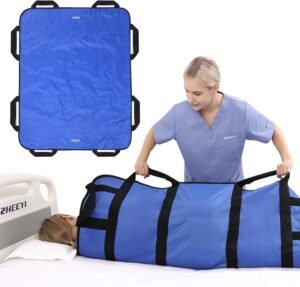
Multipurpose 48″ x 40″ …
Product description A wonderful assistive device for caregivers to take care of bedridden individuals.Get ZHEEYI transfer…
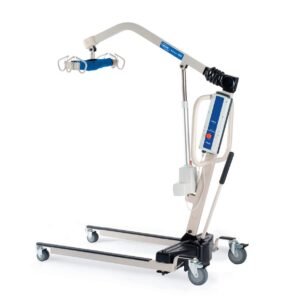
Invacare Reliant 450 Battery-Powere…
The Invacare Reliant 450 (RPL450-1) is the gold standard in patient transfer technology, combining heavy-duty construction…

Smart Caregiver Bed Exit Alarm with…
From the brand Reduce Accidents Get early alerts the moment your loved one begins to move…
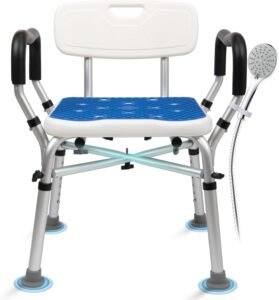
Shower Chair for Inside Shower 500l…
From the brand Modundry Strive to create a healthy, clean, and comfortable living space! Modundry is…
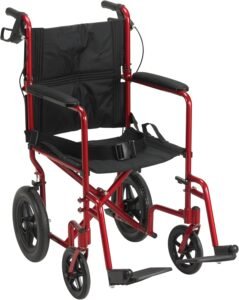
Lightweight Expedition Transport Wh…
The Drive Medical Lightweight Expedition Folding Transport Wheelchair is engineered to provide dependable, comfortable mobility support…